


Astraware Acrostic
4.452.00 Reviews
App Specs
- Version
- 2.93.001
- Updated On
- License
- Free
- Downloads
- 10,000+
- Developer
- Astraware Limited
- Categories
- Word
- Platform
- Android
Screenshots
 Analysis by AppCompare
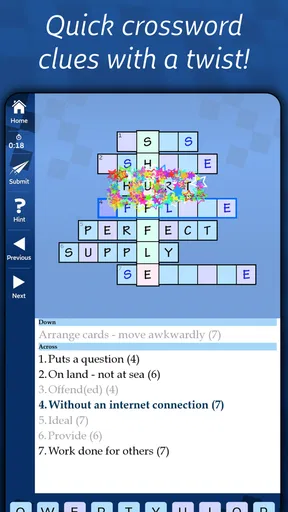
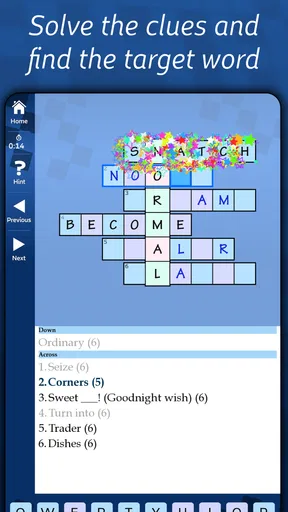
I came to Astraware Acrostic looking for a word game that would make a short break feel thoughtful rather than frantic. It is a free crossword-style game from Astraware Limited, built around solving clues and using those answers to uncover a target word. That basic idea sounds familiar, but the experience has its own rhythm: every clue matters twice, because a difficult answer can slow down the whole puzzle rather than affecting only one small square.
That makes it a useful choice for players who enjoy vocabulary, deduction, and the satisfaction of gradually seeing a puzzle take shape. It is less suitable if you want a fast arcade game, a broad social experience, or a word game based mainly on making as many words as possible from random letters. I found that the real question is not whether it is “fun” in the abstract, but whether this particular clue-and-target structure matches the way you like to think.
How I judged the game before recommending it
When I decide whether a word game deserves space on my phone, I look beyond the download price. I want to know how quickly I can understand a puzzle, whether the challenge feels fair, how useful the game is in short sessions, and whether mistakes teach me anything. I also pay attention to whether the format becomes repetitive once the first novelty disappears.
Those points matter here because the game is deliberately focused. You are not switching between several unrelated modes or managing a large collection of systems. The central activity is reading clues, entering answers, and using the resulting letters to identify the final word. If that loop suits you, the simplicity is a strength. If you need constant variety, the narrow focus may become a limitation.
I also considered how it fits into ordinary phone use. A game like this needs to work when I have only a few quiet minutes, but it should also offer enough mental resistance to justify a longer session. The best acrostic puzzles sit between a crossword and a deduction exercise: familiar enough to start without instructions, but layered enough that one uncertain clue can make me reconsider several answers.
The puzzle structure rewards cross-checking
The most important practical habit is to avoid treating each clue as an isolated question. I found it more effective to enter an answer when I was reasonably confident, then use the letters it contributes to the target word as a check on the rest of the puzzle. A clue that seems to have several possible answers becomes easier when the emerging pattern limits the choices.
This creates a pleasant back-and-forth. I might begin with the clues that have the most obvious answers, use their letters to expose part of the target, and then return to the more ambiguous clues with better context. That workflow is more satisfying than simply guessing repeatedly, because progress comes from connecting evidence rather than from luck.
Worth Reading Before You Choose

EA SPORTS FC Mobile 26 Is a Bigger Football Game, but It Takes Time

Flipboard Shows What News Apps Must Do Beyond the Feed

Switching to Android Auto Means Rethinking Your Driving Routine

Google Calendar Makes a Crowded Week Easier to Manage

Ludo King Makes the Most of the Minutes Between Plans

Baby Panda World Brings Quick Play to Modern Phones, but Its Game Library Feels Busy
It also means that a single stubborn clue does not always require immediate help. Sometimes the better move is to leave it alone and solve the surrounding entries first. The target word can act as a second route into the puzzle, and that is one of the format’s most useful little tricks for new players.
Why the target word changes the feel
In a conventional crossword, a clue answer usually helps complete the grid and nothing more. Here, the answers contribute to a larger discovery. I felt that extra layer especially when several entries were nearly complete but the final word was still unclear. The puzzle encourages me to think about relationships between answers, not just definitions.
That design gives the game a more guided feeling than a completely open crossword. It can be helpful when I want a clear destination, while still leaving enough uncertainty to make the solving process worthwhile. On the other hand, players who prefer a large grid with many intersecting possibilities may find the target-word focus more restrictive.
Where Astraware Acrostic works particularly well
The strongest part of the experience is its compact mental loop. I can open it, read a handful of clues, and begin solving without spending time learning a complicated interface. The game’s word category is obvious from the first puzzle, but the target-word layer gives it a distinct identity instead of making it feel like a plain list of definitions.
I especially liked the way the game supports partial knowledge. I do not need to know every answer immediately. A few solid entries can provide enough letters to guide the uncertain ones, and an answer that initially feels questionable can become convincing once the overall pattern develops. That makes the game approachable without making every puzzle effortless.
It is also a good fit for interrupted play. A realistic use case is a quiet ten-minute wait: I can start a puzzle, solve the easiest clues, put the phone away when my name is called, and return later with a visible structure already in place. The format does not demand the continuous attention of a timed challenge, so it works better for scattered moments than many competitive word games.
A useful method for difficult clues
My preferred approach is to divide clues into three groups: answers I know, answers I can infer from the letters, and answers where I am only guessing. I fill the first group, use the target pattern to work on the second, and leave the third until the puzzle gives me more information. This prevents one obscure clue from consuming the entire session.
Another helpful technique is to check the grammar and part of speech before focusing on the definition. If a clue seems to permit several words, considering whether it calls for a noun, verb, adjective, or plural often narrows the field. In this game, that small discipline matters because an incorrect answer can produce misleading letters and make the target word look impossible.
I would also avoid changing a plausible answer too quickly. When the final word does not appear right away, the problem may be a less familiar clue rather than the entry I first considered. Revisiting the whole pattern is usually more productive than replacing several answers at once. That is a specific advantage of the acrostic format: the target gives me a way to audit my reasoning.
Who is likely to enjoy it
I would recommend it to people who like crossword clues but prefer a smaller, more directed puzzle. It should also appeal to players who enjoy vocabulary practice without wanting a formal lesson. The game is rated Everyone, so it is positioned as an accessible word title rather than an experience aimed at mature themes or intense competition.
It can be a comfortable choice for a family member who wants a calm phone activity, provided they enjoy solving English word clues and are comfortable with the language used in the puzzles. It is also suitable for experienced word-game players who want something lighter than a full newspaper-style crossword. The challenge comes from interpretation and deduction, not from rapid tapping.
Players who dislike clues, however, should probably skip it. Someone looking for an anagram game, a spelling race, or a daily score chase may find the pace too deliberate. Likewise, if you want a game that constantly introduces new mechanics, this focused design may feel modest rather than deep.
What the public reception suggests
The game holds a 4.4 average from around 232 ratings, with about 52 written reviews, and it has passed 10 thousand installs. Those figures suggest a small but positive audience rather than a huge mainstream hit. I read that as a sign that it has found a clear niche: players who like the format tend to appreciate its straightforward word-solving focus.
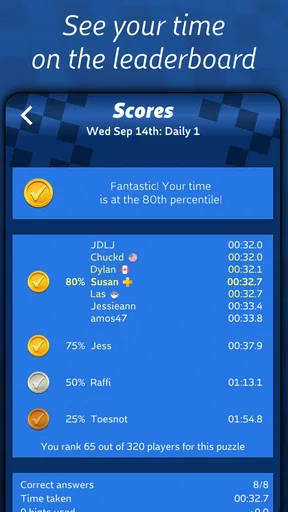
I would not use the audience size as a reason to dismiss it. Word games do not need a massive community to work, especially when the core appeal is solitary concentration. Still, the modest footprint is relevant if you prefer apps with a very active social scene, frequent public discussion, or a large ecosystem of competitive events.
Where another type of word game may fit better
The usual alternatives divide into several broad groups. Traditional crossword apps are better when I want a large grid, extensive crossing letters, and a stronger sense of completing a full page. Anagram games are better when I want quick rounds based on letter manipulation. Word-search games suit a more visual, relaxed mood, while spelling or vocabulary quizzes are preferable when I want direct testing and immediate feedback.
Astraware Acrostic sits between these categories. It has the clue-solving flavor of a crossword, but the target word gives the puzzle a more concentrated route. Compared with an anagram game, it asks me to interpret language rather than simply rearrange letters. Compared with a word search, it is more analytical and less about scanning a visual field.
That comparison helps clarify the trade-off. The game wins when I want a compact puzzle with a clear final discovery. A full crossword is probably the better choice when I want a longer, more expansive solving session. A fast anagram game makes more sense when I have only a minute and want immediate action rather than gradual deduction.
There is also a difference in how mistakes feel. In a speed-focused word game, an error may cost time or a score. Here, an uncertain clue can be useful information because it tells me where the pattern does not fit. That is more forgiving emotionally, but it can also feel slower for players who enjoy pressure and rapid performance.
When the focused format becomes a drawback
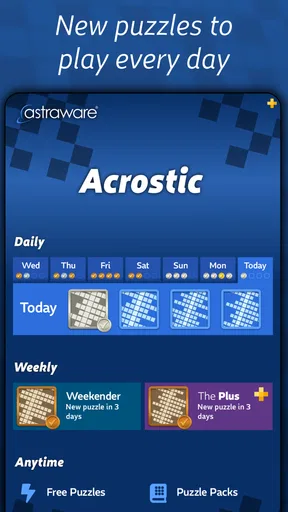
The same simplicity that makes the game approachable can make it feel limited after extended play. If I am in the mood for a broad collection of modes, themed events, or competitive features, this is not the kind of title I would choose first. Its appeal depends on whether the central puzzle loop remains enjoyable without constant additions around it.
Clue familiarity is another consideration. Word games are personal: an answer that feels obvious to one player may be completely unfamiliar to another. Because the game relies on clue interpretation, a difference in vocabulary can make a puzzle feel either pleasantly challenging or unexpectedly opaque. Players who prefer unambiguous rules may be happier with a spelling game where the task is more direct.
I also would not describe it as a replacement for a serious crossword collection. The target-word structure creates its own kind of satisfaction, but it does not offer the same experience as working through a broad grid with many layers of crossing answers. Choosing between them depends on whether you want concentrated deduction or a more expansive crossword session.
What the free download means in everyday use
The game is free to download, which makes trying the format low-risk. I could see quickly whether the clue style and target-word mechanic suited me before deciding whether it deserved regular use. There are in-app purchases ranging from $0.99 to $7.99 per item, so anyone who prefers a completely purchase-free experience should check the available options before committing to extended play.
I think the sensible approach is to treat the free version as an evaluation period rather than assuming that every part of a long-term session will remain cost-free. The important question is whether the basic experience already gives you enough enjoyment. If you only want occasional puzzles, paying for extras may not be necessary. If you become a regular player, consider the cost of those additions alongside how often you actually open the game.
This is also where the cost of switching matters. Moving from a familiar crossword app means giving up whatever routine, archive, or interface you already understand. The benefit here is a different solving pattern, not necessarily a larger feature set. I would switch when I wanted a more focused clue experience, but I would keep a traditional crossword app available for days when I wanted a fuller grid.
Device and compatibility considerations
The current version is 2.93.001, and the game requires at least iOS 9 or a later compatible operating system. That makes it relevant to people using older Apple hardware, although the practical experience will still depend on the condition and responsiveness of the device. Before installing, I would check the operating-system requirement rather than assuming every older phone or tablet will run it.
The age rating of Everyone is reassuring for households looking for a straightforward word title, but it does not automatically mean the vocabulary will be equally easy for every player. A younger player may understand the interface while still finding some clues demanding. I would frame it as accessible in presentation, with the actual challenge depending on language experience.
Because the game is from Astraware Limited, I would expect its identity to remain centered on polished puzzle design rather than social competition. That is a positive if you want a quiet solo activity. It is less compelling if your main reason for installing a word game is to compare results with friends or participate in a large community.
My recommendation after using the puzzle loop
Choose it if you want clue-based word solving with a clear final target, not if you want speed, social competition, or a huge collection of unrelated modes. That is the decision in one sentence. I found the game most enjoyable when I approached it as a short reasoning exercise: solve the obvious clues, use their letters as evidence, and return to uncertain entries only after the pattern becomes more informative.
For a friend who likes crosswords but sometimes finds a full grid too demanding, I would recommend giving it a try. The focused structure provides a gentler starting point while still rewarding careful thought. I would also suggest it to anyone who wants a screen break that feels mentally active without becoming stressful or time-sensitive.
I would steer a friend elsewhere if they mainly enjoy word games for speed, streaks, visual searching, or competitive scores. A conventional crossword is the better match for a large, layered grid; an anagram game is better for rapid rounds; and a vocabulary quiz is better for direct testing. None of those alternatives is universally superior, but each serves a different mood more effectively.
My final view is positive but specific. This is not a game I would install for endless variety. I would install it because the acrostic-style relationship between clues and target word gives ordinary word solving a satisfying second step. The free entry point makes experimentation easy, the Everyone rating keeps the presentation broadly approachable, and the modest audience suggests a specialized rather than universal appeal.
If you enjoy pausing over clues and discovering how separate answers fit together, Astraware Acrostic is worth trying. Give yourself permission to leave difficult entries unfinished, use the emerging target as a checking tool, and judge the game by whether that method feels rewarding. For me, it succeeds as a calm, compact word puzzle and earns a recommendation for the right player—not because it tries to do everything, but because it understands the particular pleasure of solving toward one final word.
Pros
- Hundreds of handcrafted puzzles provide plenty of varied solving sessions.
- Clue lengths and layouts make the game approachable for different skill levels.
- Offline play lets you solve puzzles without a Wi-Fi or mobile connection.
- Clean visuals keep the grid and clues easy to read on smaller screens.
- Progress tracking makes it simple to revisit unfinished puzzles later.
Cons
- Some puzzles may feel too challenging without a broad vocabulary.
- The free content may be limited compared with the full puzzle collection.
- Long solving sessions can become repetitive for players wanting more variety.
- Hints can reduce the satisfaction of completing difficult puzzles unaided.
- The interface may feel dated compared with newer word-game apps.
FAQs for Astraware Acrostic
What is Astraware Acrostic, and how is the game played?
Astraware Acrostic is a word puzzle game based on the classic acrostic format. You solve a series of clues, then use the answers to uncover a quotation, phrase, or other hidden passage. During testing, the game felt more thoughtful than fast-paced, making it a good choice for players who enjoy vocabulary, deduction, and gradually completing a larger puzzle rather than short arcade-style challenges.
Is Astraware Acrostic suitable for beginners?
Yes, although the game is mainly aimed at players who already enjoy crossword-style puzzles and wordplay. Newcomers may need a little time to understand how the clue answers connect with the final quotation, but the structure becomes clear after completing a few puzzles. The experience is generally relaxed, and players can work through difficult clues at their own pace instead of being forced into a strict time limit.
Does Astraware Acrostic work offline?
Astraware Acrostic is designed primarily as a self-contained puzzle experience, so the main gameplay can generally be enjoyed without a continuous internet connection. This makes it convenient for travel, commuting, or places with unreliable service. However, features such as downloading updates, accessing store content, or checking certain online services may still require an internet connection, depending on the device and version installed.
Are there hints or assistance options for difficult puzzles?
The game includes help-oriented features intended to keep challenging puzzles enjoyable rather than frustrating. When a clue or letter arrangement becomes difficult, players can use available assistance instead of abandoning the puzzle completely. The exact hint system may vary by release and platform, so it is worth checking the in-game options before starting. Using hints can affect the challenge, but they are useful for casual players.
Is Astraware Acrostic free to download, and are there in-app purchases?
Availability and pricing can differ between the Android and iOS versions, as well as by region and current store promotions. Before downloading, check the official app-store listing for the latest price, supported devices, and any information about additional puzzle packs or optional purchases. The core experience is focused on solving acrostic puzzles, but some editions may include extra content or paid features beyond the initial download.


